The Origins of Corinthians in the Bible: A Glimpse into the Heart of Early Christianity


Posted by Glenn

Written by Ian

The First and Second Epistles to the Corinthians—commonly known as 1 Corinthians and 2 Corinthians—stand as two of the most powerful letters in the New Testament. Written by the Apostle Paul, these epistles provide invaluable insight into the spiritual, moral, and social struggles of one of the earliest Christian communities: the church in the ancient city of Corinth. But to understand the heart of Paul’s message, we must first understand the world in which these letters were written.


The City of Corinth: A Crossroads of Culture and Corruption

Corinth was a thriving, cosmopolitan city in ancient Greece, located on a strategic isthmus between mainland Greece and the Peloponnese. By the time of Paul’s ministry in the mid-1st century A.D., it had become a Roman colony, rebuilt after its destruction in 146 B.C. by the Romans and later reestablished by Julius Caesar.

Known for its wealth, commerce, and diversity, Corinth was also infamous for its moral laxity and pagan practices. The temple of Aphrodite, goddess of love, loomed large over the city and was associated with ritual prostitution. In such an environment, new Christian converts faced tremendous cultural and spiritual challenges.


Paul’s Relationship with the Corinthian Church

Paul first arrived in Corinth during his second missionary journey, around A.D. 50-52, as recorded in Acts 18. He stayed there for approximately 18 months, working as a tentmaker and preaching both to Jews and Gentiles. During this time, he established a diverse Christian community made up of people from various backgrounds—Jews, Greeks, slaves, and free citizens.

After leaving Corinth, Paul remained in touch with the believers there through letters and occasional visits, as issues continued to arise within the church. The two letters we now have—1 and 2 Corinthians—represent part of a larger correspondence, some of which has been lost.


1 Corinthians: A Letter of Correction and Unity

1 Corinthians was likely written from Ephesus around A.D. 54–55. Paul had received troubling reports from members of Chloe’s household (1 Cor 1:11) about divisions, sexual immorality, lawsuits among believers, and abuses during the Lord’s Supper. In response, he wrote this epistle to correct these problems and to answer questions the Corinthians had sent him in a letter.

Key themes of 1 Corinthians include:

  • Church unity (Ch. 1–4)
  • Moral purity (Ch. 5–7)
  • Freedom and responsibility (Ch. 8–10)
  • Spiritual gifts and love (Ch. 12–14)
  • The resurrection of Christ and believers (Ch. 15)

Paul emphasizes Christ crucified as the foundation of faith and calls believers to live holy lives set apart from the values of the surrounding culture.


2 Corinthians: A Letter of Defense and Encouragement

2 Corinthians, written perhaps a year later around A.D. 55–56, is more personal and emotional. Paul writes in response to continued challenges to his authority as an apostle and to express relief after hearing from Titus that the majority of the church had repented after his earlier rebuke.

In this letter, Paul:

  • Defends his apostolic ministry and suffering for the gospel
  • Urges the Corinthians to complete their collection for the impoverished church in Jerusalem
  • Appeals for reconciliation and obedience

It reveals Paul’s deep love for the Corinthians and his vulnerability as a servant of Christ who is afflicted but not crushed (2 Cor 4:8–9).


Legacy and Relevance

The letters to the Corinthians are not merely historical documents; they speak across the ages to modern churches still grappling with division, temptation, and spiritual confusion. Paul’s boldness, humility, and theological depth challenge believers today to live in unity, love, and the power of the resurrection.

From a bustling Greco-Roman port city filled with temptation and idols came one of the richest sources of Christian teaching on grace, discipline, love, and hope. The Corinthians were flawed, but God was not finished with them—just as He is never finished with us.
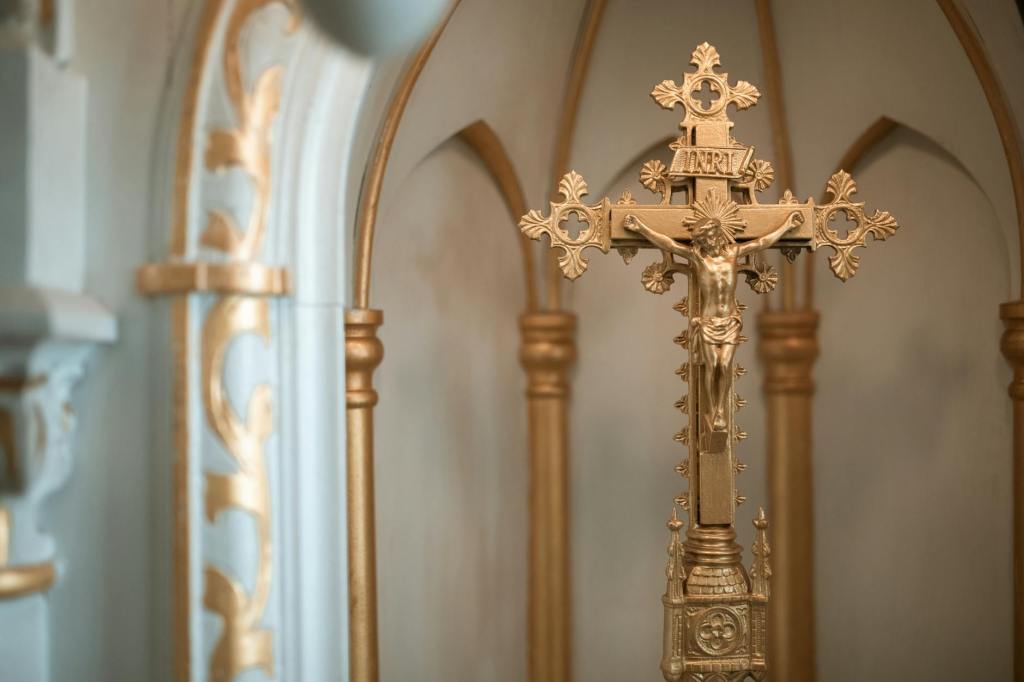

Rejected, But Not Forsaken — Finding Love in God’s Arms

Posted by Glenn Riley

Written by Ian Taylor

I used to believe that rejection meant something was wrong with me.

That I wasn’t enough.
Not strong enough.
Not good enough.
Not… something enough.

Like many people searching for love, I put my heart out there more than once. I gave the best of myself. I hoped. I waited. And still — the door closed. The silence came. The goodbye lingered longer than the love ever did.

And for a long time, I let those wounds define me.

But then I opened my Bible.
And I began to see something I hadn’t seen before:

> “He was despised and rejected by men, a man of sorrows and acquainted with grief.”
(Isaiah 53:3)

Even Jesus — perfect, blameless, loving — was rejected.
Not just once. Not just by strangers. But by people He healed. People He taught. People He loved.

If even the Son of God was turned away, then rejection can’t be proof that we’re unlovable.
In fact, maybe it’s just proof that we love deeply — and that some things aren’t meant to stay.

I want to share something personal.

There was a woman I truly cared for. I thought she might be the one.
We spoke of dreams, faith, a future. But over time, things faded.
Her silence spoke what her words didn’t: I wasn’t her answer.

And as hard as it was to accept, I eventually realized — maybe she wasn’t mine either.

Because that rejection, that ache…
It sent me straight into the arms of Someone who’s never turned me away.

> “Though my father and mother forsake me, the Lord will receive me.”
(Psalm 27:10)

In the quiet after heartbreak, I found a different kind of love — steady, unconditional, unshakable.
Not the fireworks kind, but the kind that stays. The kind that heals. The kind that whispers, “I’ve loved you all along.”

Rejection will always sting.
But it doesn’t mean you’re broken.
It might just mean you’re being protected — and redirected.

Maybe the heartbreak was mercy.
Maybe the goodbye was grace.
Maybe the closed door was God saying, “That’s not the love I planned for you.”

Because the greatest love story you’ll ever live…
Is the one where you realize you were already chosen.

> “I have loved you with an everlasting love; I have drawn you with unfailing kindness.”
(Jeremiah 31:3)

If you’re nursing a bruised heart today — know this:

You are not your rejection.
You are God’s beloved.
And your story isn’t over — it’s just rerouted toward something far more eternal.

With peace,
Ian

Ask, Let Go, and Trust Surrending Your Heart’s Desire to God


Posted by Glenn Riley


Written by Ian Taylor


Some prayers are whispered louder than others.

They’re not shouted from a mountaintop — they’re breathed through tears on a lonely night. They come from a deep place inside:
“Lord… this is what I want. Please let it be.”

We all have those desires.
To be loved.
To be healed.
To be seen.
To be used for something meaningful.

I know that feeling all too well — the aching in the heart for something that hasn’t arrived yet.

And here’s the truth:
God cares about those desires.

“Take delight in the Lord, and He will give you the desires of your heart.”
(Psalm 37:4)

But there’s a condition in that verse that’s often overlooked:
Take delight in the Lord.
Not in the outcome. Not in the timing.
Not even in the desire itself.
But in Him.

That’s the hard part, isn’t it?

Because asking is easy.
Letting go? That’s where the real faith begins.


I’ve prayed for many things in my life.
Some came quickly. Others took years.
And some… I’m still waiting on.

I once asked God to bring someone into my life. I believed she might be the one.
I prayed, fasted, and laid it all before Him.
And then — silence.

At first, I questioned myself. Then I questioned her.
But eventually, I realized… I was trying to hold what wasn’t mine to carry.

So I let it go.
Not out of hopelessness — but out of trust.

“Do not be anxious about anything, but in every situation, by prayer and petition, with thanksgiving, present your requests to God.”
(Philippians 4:6)

I gave it to Him — fully.
And something shifted in my spirit.

Because letting go isn’t about giving up.
It’s about placing it in hands that are bigger than yours.


If you’re clinging tightly to something today — a relationship, a dream, a breakthrough — I want to encourage you:

Ask boldly. But hold it loosely.

God is not deaf to your cries.
He’s not ignoring your prayers.
He’s not playing with your hope.

He’s preparing you for the blessing — or preparing the blessing for you.
And sometimes, He’s doing both at once.

“Now to Him who is able to do immeasurably more than all we ask or imagine, according to His power that is at work within us…”
(Ephesians 3:20)

Trust means accepting His yes, no, and not yet — with the same faith.

Letting go doesn’t mean you stop caring.
It means you stop controlling.

And that’s where peace lives.


So here’s my prayer for you today:

May your faith be strong enough to ask,
Your heart soft enough to surrender,
And your spirit brave enough to wait on God —
Even when the answers are slow.

Because His “no” is never punishment.
And His “yes” is never rushed.
And what’s meant for you — can’t miss you.

With hope,
Ian


Through the Fire – Overcoming Adversity  with God at My Side


Posted By Glenn Riley

Written by Ian Taylor

There are moments in life when everything you’ve leaned on feels like it’s crumbling.

For me, it was the day I lost both of my parents.
Not at once, but close enough that the grief didn’t have time to rest.
The two people who held me when I was weak, who prayed for me, who guided me — were gone.

Suddenly, I was no longer someone’s son.
I was just… alone.

Grief has a way of stripping you down to the bone. It’s not just about missing someone — it’s about losing your anchor, your shelter, your sense of home.
And in those moments, adversity doesn’t feel poetic or powerful.
It feels suffocating.

But it was in that space — that darkness — I began to understand something far deeper:

“When you pass through the waters, I will be with you;
and when you pass through the rivers, they will not sweep over you.
When you walk through the fire, you will not be burned.”

(Isaiah 43:2)

God didn’t say if.
He said when.

Adversity is part of the journey.
Pain is part of the shaping.
Loss — as soul-shaking as it is — has the power to hollow us out so that grace can fill the empty space.


There were days I questioned why.
Why them? Why now? Why like this?

But over time, I stopped asking “Why?”
And I started asking, “Where are You in this, God?

And slowly, gently, He answered.

In the silence of my sorrow, I felt peace I couldn’t explain.
In the loneliness, I found a strength that wasn’t my own.
And in my tears, I discovered that Jesus had wept too.

“The Lord is close to the brokenhearted and saves those who are crushed in spirit.”
(Psalm 34:18)

I’m not going to pretend it was easy.
Grief doesn’t just vanish — it transforms.
But what I’ve learned is this:
When everything else is stripped away, what’s left is what truly sustains you.

And for me, that’s been faith.
Not a loud, shouting faith — but a quiet, holding-on-by-a-thread kind.
The kind that simply whispers, “I’m still here.”


If you’re facing your own adversity today — be it loss, illness, rejection, or hopelessness — I want you to know:

You are not alone.
Even if it feels like you are.
Even if no one calls.
Even if you’re too tired to pray.

God is not waiting for you at the finish line —
He’s walking with you in the fire.

“We are hard pressed on every side, but not crushed;
perplexed, but not in despair; persecuted, but not abandoned;
struck down, but not destroyed.”

(2 Corinthians 4:8–9)

You will make it through this.
Not because you’re strong —
But because He is.

And maybe, just maybe…
The fire you’re in right now is refining something precious in you.
Something that pain can’t destroy.
Something called purpose.

With hope,
Ian


When Love Hurts — And Still Heals


Posted by Glenn Riley

Written by Ian Taylor


We don’t talk enough about how much love can hurt.

The kind of pain that doesn’t come from hate or betrayal — but from deep care. From loving someone who’s distant. From giving your all and wondering if it was enough. From holding space for someone in your heart, even when they no longer walk beside you.

Yes, love heals — but first, it wounds.

And the Bible doesn’t shy away from this truth.

💔 Jesus Wept

When Jesus saw Mary weeping for Lazarus, He didn’t preach. He didn’t lecture.
He wept (John 11:35).

Even though He knew resurrection was coming, He entered into the pain of love — showing us that real love allows itself to feel. To mourn. To break.
Love without pain is love without depth.


💔 David and Jonathan

David loved Jonathan “as his own soul” (1 Samuel 18:1). And when Jonathan died, David’s grief was raw:

“I grieve for you, Jonathan my brother;
you were very dear to me.” (2 Samuel 1:26)

That wasn’t easy love. That was costly, heart-carving love. The kind that stays with you.


💔 God’s Love for Us

God’s entire relationship with humanity is marked by love that hurts. The people He rescued turned away. The ones He blessed forgot Him. The ones He gave everything to — gave Him the cross.

But still… He loved.
Still… He gave.
Still… He forgave.

“But God shows his love for us in that while we were still sinners, Christ died for us.” (Romans 5:8)

That’s love — not the pretty kind, but the powerful kind.
Love that bleeds. Love that sacrifices. Love that keeps the door open, even when the room is empty.


If you’re reading this and feeling the ache of love — maybe from a breakup, from loss, from distance, or from loving someone who doesn’t seem to love you back — know this:

You’re not weak.
You’re not foolish.
You’re human.

And you’re following in the footsteps of the greatest Lover the world has ever known.

Sometimes love hurts because it’s real.
But it also shapes us, grows us, and softens parts of us that nothing else can.

Hold on.
Let it hurt — but don’t let it harden you.
Because even in pain, love is doing something sacred inside you.

And God sees every tear.

With grace,
Ian


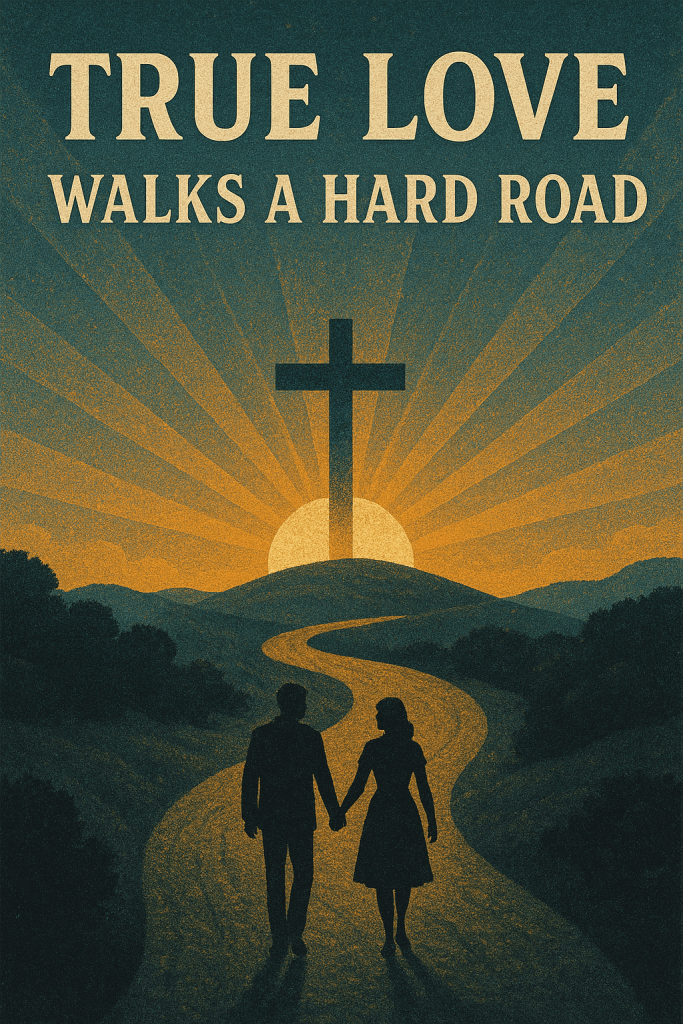
True Love Walks a Hard Road


Keeping Faith In Love

Posted by Glenn Riley

Written by Ian Taylor


We live in a world that tells us love should be easy. That if it’s right, it won’t hurt. That if it’s meant to be, it won’t require struggle.

But that’s not what the Bible teaches us. And if I’m honest — it’s not what life has shown me either.

The path to true love — the kind that lasts, the kind that’s real — is never easy.

Just look at the love stories in Scripture:

  • Jacob waited fourteen years for Rachel (Genesis 29:20–30). He worked tirelessly, endured deception, and held onto his love through it all. Why? Because she was worth it.
  • Hosea loved Gomer, even when she turned away from him time and time again (Hosea 3). God used that story to show the kind of love He has for us — a love that redeems, restores, and refuses to quit.
  • Even Ruth and Boaz’s story was built on loss, grief, uncertainty, and sacrifice. Ruth didn’t chase romance — she chased loyalty, and God honored her for it (Ruth 1–4).

These weren’t fairy tales. They were raw, messy, patient stories filled with faith, pain, and choices. Love wasn’t a feeling. It was a decision — made over and over again.

And maybe that’s the message we all need.

Because real love — the God-honoring kind — won’t always feel like a warm breeze.
Sometimes it feels like carrying a cross.

Love teaches us patience.
It forces us to lay down pride.
It calls us to forgive when it’s hard, to wait when we want to rush, and to speak truth even when silence would be easier.

I believe love is sacred. But I also believe it’s not for the faint of heart. That’s why Paul writes in 1 Corinthians 13:

“Love is patient, love is kind…
It does not envy, it does not boast…
It always protects, always trusts, always hopes, always perseveres.”
(1 Corinthians 13:4–7)

If love was always easy, that verse wouldn’t need to exist.

So if you’re in a season where love feels distant, or like the one you care about has drifted away…
If your heart is weary from waiting, or wounded from what love cost you…

Know this:
God sees you.
He understands every ache.
And in His timing — not ours — love will come. And it will be worth the lessons, the tears, the waiting, and the work.

The path is hard — but the destination is holy.

Stay faithful.
Walk slow.
And trust that what’s meant to be doesn’t arrive without being tested first.

With faith,
Ian


Opening Post

Posted by Glenn

Written by Ian

There were moments I didn’t think I’d make it through.

Nights where the silence was too loud. Days when the weight of life sat heavy on my chest. I’ve walked through valleys so long and dark, I forgot what the sun even looked like.

But here’s what I’ve learned:
Even when you can’t see it — there’s always light.

Sometimes, we don’t need someone to fix everything.
We just need to know we’re not alone.
That someone, somewhere, has felt this too.
That God is still listening — even when we’re too tired to pray.

This blog was born out of that quiet truth.

Light At The End Of The Tunnel isn’t about perfection. It’s not for the ones who have all the answers. It’s for the weary, the wounded, the ones who are still standing despite it all. It’s for those whose faith is flickering but not gone. For those who want to believe again — in God, in grace, in themselves.

Here, I’ll share reflections from my own walk. Scriptures that gave me strength. Thoughts that carried me when nothing else did. I’m no preacher. Just a man who knows what it feels like to fall — and to get back up by the grace of God.

If you’re reading this, I want you to know something:

Your story isn’t over.
The tunnel doesn’t last forever.
And the light? It’s real.
You will see it again.

Thank you for being here.
May this blog become a place of peace for you — just as it’s becoming one for me.

With faith,
Ian